
Introduction
Gold is a trusted way to save money in the UAE. But holding physical gold can be difficult and risky. You must arrange safe storage and pay for insurance.
The Emirates Islamic gold certificate offers a safer option. Your gold stays secure in the bank’s vault. You still benefit from gold price movements. You do not need to handle or store it yourself.
This guide explains how the gold certificate works. It also covers Shariah compliance, fees, risks, and suitability.
What Is the Emirates Islamic Gold Certificate?
An Emirates Islamic gold certificate is a document representing ownership of physical gold. Instead of keeping gold at home, the bank holds it for you. It acts as a bridge between traditional bullion and modern digital banking.
Who It Is For
This product targets three main groups:
- Retail Investors: People who want to save in gold without high storage costs.
- Active Traders: Those looking to profit from gold price swings quickly.
- Institutional Buyers: Entities needing a secure way to hold large gold reserves.
The core problem it solves is simple. Physical gold ownership in the UAE has traditionally meant buying from the Gold Souk, arranging secure storage, verifying purity, and accepting the inconvenience of resale. Gold Certificates remove all of that.
How the Emirates Islamic Gold Certificate Works (Step-by-Step)
Investing in gold through a bank is a structured process. It is designed to be as simple as a standard bank transfer.
Account Opening
You need an active Emirates Islamic bank account. Priority Banking customers usually get direct access. Personal banking customers may need branch approval. Check eligibility before applying. You must submit basic KYC documents. These include Emirates ID, passport, and proof of address.
Buying Process
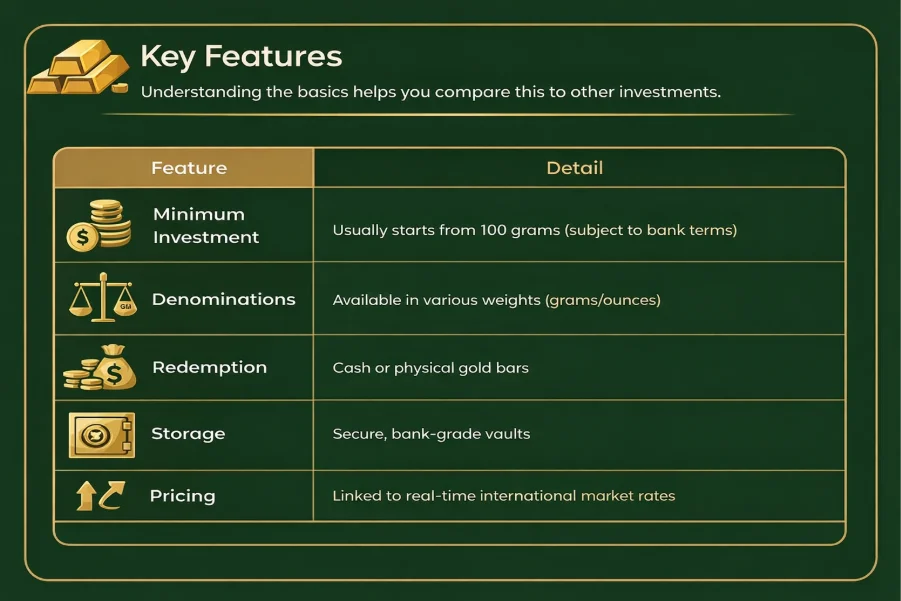
You can buy through a branch or the EI+ app. The price follows the bank’s daily gold rate. This rate tracks global gold spot prices. You can choose bar sizes like 100g, 500g, or 1kg. The bank charges a processing fee on purchases. It is 1.25% below 500g and 1.0% above 500g. After payment, you receive a gold certificate. It includes details like bar weight and serial numbers.
Storage and Custody
Your gold bars sit in vaults managed by international custodians. The bank links your certificate to specific, allocated bars. This means your gold is physically separated from the bank’s own assets. You are not a creditor; you are an owner.
Selling Process
You can sell back to Emirates Islamic at any time before the certificate’s maturity. The bank repurchases at its prevailing daily buyback rate. Partial redemption is allowed in multiples of the original denomination. You cannot redeem fractions of a bar.
Redemption
You can choose cash settlement or physical delivery of gold bars. Physical delivery is available at the branch. The bank needs a formal redemption request before processing. Allow 1–3 business days for physical collection. Cash redemption is typically faster.
Do You Own Physical Gold or a Financial Instrument?
Allocated vs Unallocated Gold
Most bank certificates use an unallocated model for liquidity. This means you own a specific amount of gold from the bank’s total pool. However, the bank guarantees that every gram sold is backed by physical bars in their vault.
Ownership Rights
Legally, the certificate proves your right to a specific weight of gold. You are not a creditor of the bank; you are an owner of an asset. This distinction is vital if the bank ever faces financial trouble.
What “Backed by Gold” Means
“Backed by gold” means the bank cannot sell more certificates than the gold it holds. For every Emirates Islamic gold certificate issued, there is a corresponding amount of physical bullion in a secure vault.
Shariah Compliance Explained (AAOIFI Standard)
Emirates Islamic follows strict Islamic banking rules. This makes the gold certificate a “Halal” investment.
What Makes Gold Halal
In Islam, gold is a “Ribawi” item. This means it must be traded hand-to-hand and without delay. The gold certificate complies because the exchange of money for gold happens instantly at the time of the contract.
Ownership and Possession
Shariah requires the buyer to take possession. With these certificates, “constructive possession” occurs. Even if you don’t touch the gold, you have the legal right to it immediately. This satisfies the AAOIFI (Accounting and Auditing Organization for Islamic Financial Institutions) standards.
Compliance Mechanism
An internal Shariah Board reviews all gold transactions. They ensure the bank does not engage in short selling or interest-based lending using your gold.
Gold Certificate Fees Structure
No investment is free. You must understand the costs to calculate your actual returns.
Buying & Selling Fees
The bank charges a small commission on each trade. This is usually a percentage of the total transaction value.
Spread vs Spot Price
The “Spread” is the difference between the buying price and the selling price.
- Bid Price: What the bank pays you.
- Ask Price: What you pay the bank.
The gap between these is how the bank covers its costs.
Storage Costs
Unlike physical gold at home, the bank charges for vaulting. These fees are typically very low, often billed annually or quarterly based on the value of the gold held.
Hidden Charges
Always ask about:
- Physical delivery fees (if you want the bars).
- Account maintenance fees.
- Early exit penalties (though rare for gold).
Gold Pricing and Valuation
Price Determination
The bank sets a daily price for gold certificates, derived from live international spot prices quoted in USD per troy ounce. This price is then converted to AED per gram. The rate is updated during banking hours and may not reflect intraday price movements.
Bank vs Market Pricing
You are buying at the bank’s rate, not the raw spot price. The bank’s sell rate (to you) is above spot, and the buy rate (from you) is below spot. During volatile market sessions, this spread can widen. If you need intraday price precision, gold certificates may not be the right instrument. For long-term holders, the daily rate is sufficient.
Liquidity and Exit Strategy
Selling Speed
You can submit a redemption request at any Emirates Islamic branch on any banking day. Cash redemption typically settles within 1–2 business days. This is faster than selling physical gold bars from a private vault, which requires transport, security, and dealer negotiations.
Market Liquidity
Gold is one of the most liquid assets in the world. Emirates Islamic provides a ready market, meaning they are always willing to buy the gold back from you during business hours.
Gold Certificate Redemption Process
Physical Gold Conversion
You can request physical delivery of your gold bars at any time. The bars are the same ones referenced on your certificate. They carry the same serial numbers that were assigned at the time of purchase.
Timeline
Redemption is not instant. It usually takes 3 to 7 business days. The bank must prepare the bars and ensure all security protocols are met.
Conditions
You can typically only redeem in standard bar sizes (e.g., 1kg or 10-tola bars). If your certificate is for a non-standard weight, you may have to sell the fractional part for cash.
How to Verify Certificate Authenticity
Verification Methods
Every Emirates Islamic gold certificate is linked to your digital banking ID. You can verify your holdings at any time via the official app or website.
Serial Numbers
Ask the bank to confirm the bar number, refinery, and weight at the point of purchase. Keep this documentation. When you redeem, the bars delivered should match the serial numbers in your records.
Fraud Prevention
Emirates Islamic is regulated by the Central Bank of the UAE. All gold custody and certificate issuance happen within a regulated framework. To protect yourself, always transact at official bank branches, never through third-party agents claiming to offer Emirates Islamic products, and confirm your certificate details match your bank statement.
Gold Quality, Refinery Standards, and LBMA Compliance
Purity Standards
The 100g gold bars are 999.9 pure. This is the highest purity level available in the market. The 500g and 1kg bars are 995 pure. This is the standard used for large, institutional gold bars worldwide.
LBMA Good Delivery Standard
LBMA Good Delivery is a global standard for gold bars. It is set by the London Bullion Market Association. These bars meet strict rules for weight and purity. They also come from approved and certified refineries. Emirates Islamic stores gold with trusted global custodians. These custodians follow LBMA standards for safety and quality.
Global Acceptance
LBMA-approved gold is accepted worldwide. Central banks and large investors trust these bars. They are also traded on major commodity exchanges. This makes them easy to sell in global markets. When you take physical delivery, you receive recognized gold. You can sell it anywhere without extra verification.
Storage, Custody, and Security
Vault Storage
Your gold is held by global custodians in professionally managed, insured vaults. Emirates Islamic does not store gold in local bank branches. It partners with institutional custodians who specialize in precious metals storage.
Insurance
The gold in custody is insured. The insurance covers theft, physical damage, and loss while in the vault. Confirm the specific insurance terms with the bank at the time of account opening, as coverage conditions may vary.
Custody Model
The allocated custody model means your bars are segregated. They do not form part of the bank’s balance sheet. If Emirates Islamic were to face financial difficulties, your gold bars, as specifically allocated, owned assets are protected from claims by the bank’s creditors. This is a significant structural protection compared to unallocated accounts.
Risks and Investor Protections
Every investment has risks. You must be aware of them before buying.
Price Risk
The price of gold can go down. If you buy at $2,500 and the price drops to $2,000, you will lose money if you sell. The bank does not guarantee your profit.
Counterparty Risk
This is the risk that the bank fails. However, because the gold is a physical asset held in trust, it is generally protected from the bank’s creditors under UAE law.
Liquidity Risk
In extreme global crises, markets can freeze. While rare for gold, it is a technical possibility that could delay your sale for a few days.
Protection Mechanisms
- Allocated bar ownership separates your gold from the bank’s balance sheet
- Emirates Islamic is regulated by the Central Bank of the UAE
- ISSC Shariah oversight ensures the product structure remains compliant
- Certificate serial numbers provide direct traceability to physical bars
Tax and Regulatory Requirements in UAE
Tax Treatment
Currently, there is no Capital Gains Tax for individuals in the UAE on gold investments. However, Value Added Tax (VAT) of 5% may apply to physical delivery if the gold is not “investment grade” (less than 99% pure). Most certificates avoid this as they deal with 99.9% purity.
Compliance Rules
The UAE Central Bank regulates all gold investment products. This ensures the bank follows strict rules regarding transparency and customer protection.
Transfer, Collateral, and Institutional Use
Transfer Process
You can often transfer your gold holdings to another person who has an account at the same bank. This is useful for inheritance or gifting.
Collateral Use
One major benefit is using your gold as collateral. The bank may offer you a loan or a credit card based on the value of your Emirates Islamic gold certificate.
Institutional Applications
Companies use these certificates to hedge against currency inflation. It is a safer way to balance a balance sheet than holding physical bars in an office. Royal Bullion Capital works with institutional partners looking for secure, compliant gold custody solutions.
ESG, Responsible Sourcing, and Provenance
Responsible Gold
Emirates Islamic provides conflict-free gold. This means the gold is not linked to war zones or child labour. The gold follows international responsible sourcing standards. These rules help protect workers, communities, and the environment.
Clear Supply Chain
The bank works with trusted and approved refineries. These refineries follow global compliance and audit standards.
They track gold from the mine to the vault. This process is called provenance. Provenance gives full visibility of the gold’s origin. It builds trust and helps investors make informed decisions. Royal Bullion Capital follows the same mine-to-market traceability model for all gold it sources and refines.
Gold Certificate vs. Dubai Gold Market
Price Difference
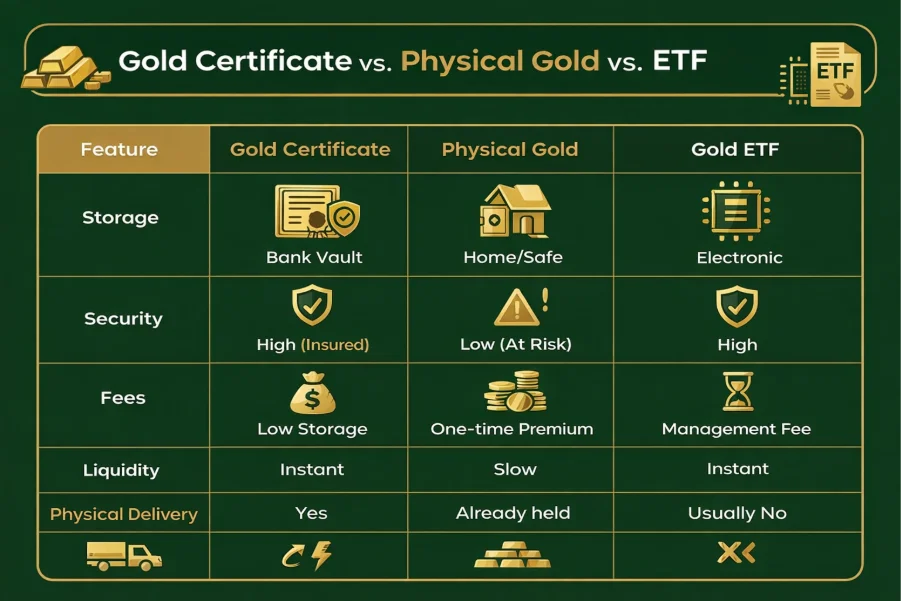
Gold Souq prices are usually retail rates. These often include making charges and seller margins.
Gold certificates follow spot or wholesale prices. They are often cheaper for larger investments.
Safety and Convenience
Buying from the Souq means carrying physical gold. This can involve risk and storage concerns.
Gold certificates keep your investment digital. Your gold stays secure until you choose to withdraw it.
Eligibility and Investment Checklist
Who Can Invest
- UAE Nationals
- Resident Expats with a valid Emirates ID
- Corporate entities registered in the UAE
- Priority and private banking customers have preferential access
Documents Required
- Original Emirates ID
- Passport and Visa copy
- Proof of funds (for large amounts)
- Active Emirates Islamic bank account
Who Should Invest in Gold Certificates?
- Retail Investors: If you want to put 5-10% of your savings into gold.
- Traders: If you want to buy gold today and sell it next week for a profit.
- Institutional Buyers: If you need to secure company assets against inflation. Contact Royal Bullion Capital to explore institutional gold custody solutions.
Final Verdict: Should You Invest?
The Emirates Islamic gold certificate is one of the safest ways to own gold in the UAE.
Pros
- No storage or security worries.
- Instant liquidity.
- Fully Shariah-compliant
- Competitive pricing compared to retail shops.
Cons
- Annual storage fees apply.
- Requires a bank account.
- Physical delivery takes time.
Best Use Case
If you want to own gold as a long-term insurance policy for your wealth but don’t want to hide bars under your mattress, this is your best option. It provides the peace of mind of a bank with the stability of gold.
FAQs
What is an Emirates Islamic gold certificate in the UAE?
An Emirates Islamic gold certificate is a digital way to invest in gold. It represents real gold held securely by the bank.
How does an Emirates Islamic gold certificate work?
You buy gold based on current market prices. The bank stores the gold on your behalf in secure vaults.
Is the Emirates Islamic gold certificate Shariah compliant?
Yes, it follows Islamic finance principles. It avoids interest and ensures real asset backing.
What is the minimum investment for an Emirates Islamic gold certificate?
The minimum amount depends on the bank’s rules. It is usually based on a set gold weight or value.
How can investors buy an Emirates Islamic gold certificate in the UAE?
You can apply through the bank branch or online banking. An account with the bank is usually required.
What fees apply to Emirates Islamic gold certificate investments?
Fees may include buying, selling, and storage charges. These costs vary based on the transaction and amount.
Can investors convert an Emirates Islamic gold certificate into physical gold?
Yes, investors can request physical gold delivery. This depends on available bar sizes and conditions.
How long does it take to open a gold certificate account in the UAE?
Account opening is usually quick and simple. It may take a few hours to a few days.
What are the risks of investing in a gold certificate in the UAE?
You need valid ID, such as Emirates ID or passport. Proof of address and bank details may also be required.
Are gold certificate investments taxable in the UAE?
The UAE has no personal income tax on such investments. However, rules may change, so always check current laws.
How is the value of an Emirates Islamic gold certificate calculated?
The value follows global gold prices. It changes based on market rates and gold weight.
Can expatriates invest in an Emirates Islamic gold certificate in the UAE?
Yes, expatriates can invest if they meet bank requirements. A valid UAE residency is usually needed.
What is the difference between gold certificates and physical gold in the UAE?
Gold certificates are digital and easier to manage. Physical gold requires storage, insurance, and handling.
How can investors sell or redeem an Emirates Islamic gold certificate in the UAE?
You can sell back to the bank at current prices. The amount is credited to your account after the transaction.